

HyT Capital's Sun Yelin: Insight in Action — Exploring the Patterns Behind Growth
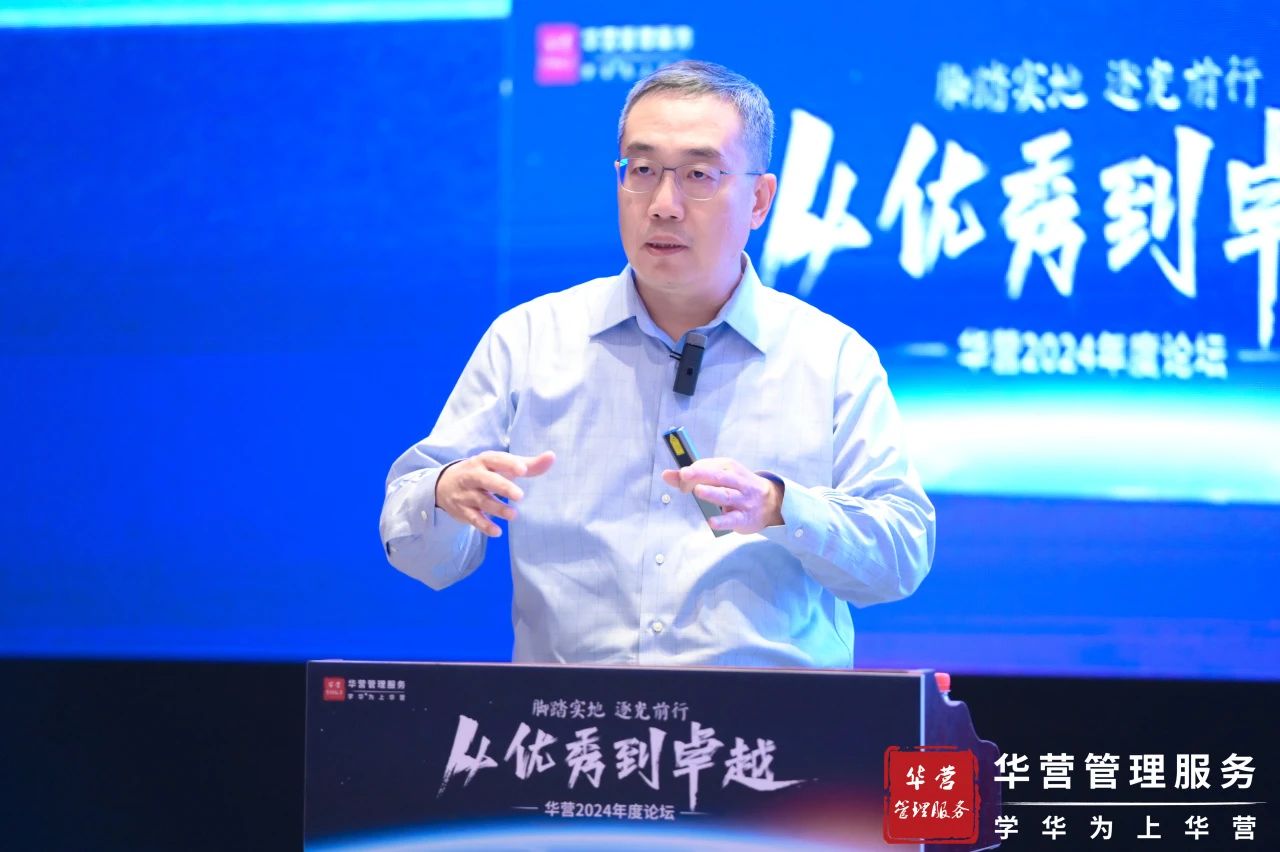
Source: This article is based on a talk delivered by Mr. Sun Yelin at HyT wei Enterprise's 2024 Annual Forum
Speaker: Sun Yelin, Founding Partner of HyT Capital, Huawei Enterprise Mentor
Editor-in-chief (HyT Enterprise): Annie | Editor: Huo Jiafan
This article is republished from [Hua Enterprise Management Private School]【华营管理私塾】
As a VC firm focused on early-stage technology investments, our years of experience have given me deep insights into business growth. After 2023, the overall environment has changed dramatically. We are like a ship sailing on a vast ocean. If we are not entirely sure whether our direction is correct, we still need to keep moving forward. We may gain a lot, or we may encounter storms. At times like this, seeing future trends clearly becomes especially important. At the same time, for many entrepreneurs, after identifying a trend, how to build the capability to capture opportunities and create long-term, sustainable growth is the very essence of an enterprise's enduring vitality.
01 Behind Growth Lies Development
Behind growth lies development — the development of the founder, the founding team, and the company as a whole. Growth is the result; development is the root cause. How can an enterprise maintain development while pursuing growth? There are four key elements.
1. Motivation is the foundation: Everything we do is driven by motivation. Motivation is like the ground beneath our feet. The stronger the motivation, the more stable the ground, allowing us to run and jump on it. If the ground is unstable, many actions become impossible. Different entrepreneurs or founding teams have different directions and levels of determination in their motivation, which leads to different outcomes. Motivation does not directly produce results, but it is the source of strength.
2. Cognition is the ceiling: Cognition is like the ceiling of a hall — it determines the space in which we can move. Different founders and teams have different cognitive heights. We have been fortunate to witness many entrepreneurs at Hua Enterprise who, after three or four years, have seen their mental space open up, breaking free from habitual experiences and achieving tremendous leaps in cognition. They are now able to think more broadly. As a result, when they encounter problems, they have richer perspectives and more choices. Cognition does not directly produce results either, but it shapes the magnitude of the results
3. Action produces results: To achieve results, action must be taken. Some people act quickly, some act slowly, and some act quickly but without power. Actions take different forms, but action directly produces results.
4. Capability sustains consistent action output: Capability supports the ability to achieve relatively consistent and stable results through action. If a basketball player does not train in strength, jumping, shooting, dribbling, and ball control — even if he plays every day — his skill level will still fall far short.
The differences between enterprises in these four dimensions are mainly reflected in: first, the differences in the level of each dimension; second, the differences in the degree of coupling between the dimensions. The tight coupling of these four elements is like the core of our body — core stability is the foundation and guarantee for all kinds of movement.
The philosophical beliefs of entrepreneurs are the core of these four elements. Why do entrepreneurs differ in the intensity and durability of their motivation, as well as in the speed of their cognitive iteration? The underlying reason is that their philosophical beliefs are different. Everyone has different underlying assumptions about the world, life, and human relationships. While no assumption is inherently good or bad, they nonetheless produce different effects.
Behind growth lies development. Behind development lies the continuous strengthening of these elements and the entry into a positive cycle.
02 The Motivation, Cognition, Action, and Capability of Entrepreneurs
For entrepreneurs, motivation can be divided into extrinsic compensatory motivation and intrinsic transcendent motivation. Extrinsic compensatory motivation uses fame and profit as driving forces, while intrinsic transcendent motivation uses the desire to achieve, to help customers obtain better product experiences, and to sincerely provide excellent people within the organization with better opportunities for growth and development. Most entrepreneurs have a mix of motivations. Some entrepreneurs, after having their basic needs met, still pursue fame and power as their highest goals.
They want to show that they are better and more exceptional than others. This does not come from self-worth recognition, but from the evaluation of others. This is therefore a form of compensatory motivation. Compensatory motivation has value but is unstable. The ups and downs of many companies can be traced back to the instability of the founder's intrinsic motivation.
Most startup entrepreneurs have a very strong achievement motivation. In the startup phase, they must firmly navigate through uncertainty to achieve initial success. They often have a complementary co-founder with strong interpersonal skills. When the company grows to a medium or large scale, if the entrepreneur continues to be driven solely by achievement motivation, it can create negative pressure on the company. At this point, the motivation needs to evolve toward a more intrinsic transcendent type — letting go of personal image, power, and desires, and achieving results indirectly by influencing others.
Kwon Oh-hyun, former President of Samsung Electronics, wrote in his book Strategic Certaintyabout the three questions he asks subordinates when they come to him with work problems:
First, what is your solution to the problem? Based on your experience, what do you recommend?
Second, if you don't have a solution, should you move to an area where you are more competent?
Third, if you have neither a solution nor the willingness to move to another department, should you leave?
The founder has a unique role. Some things must be done by the founder, while other things need to be done by team members. For example, in technology and innovation companies, there are five important things that the founder must do and that are difficult for a second-in-command or team members to accomplish: strategy, organization, leadership, innovation, and decision-making. This is because tech companies are typically founded by product experts or technical experts. Without a comprehensive understanding of business, it is difficult to achieve sustained success in this field.
For entrepreneurs, cognition primarily consists of two parts: First, strategy and product definition — primarily grasping the overall direction and accurately defining the product. Of course, this part does not necessarily have to be done by the founder alone; it can also be done together with a co-founder. Second, the understanding and definition of the organization.
In terms of action, entrepreneurs mainly need to close the loop from goal management to incentives. Many companies advocate being customer-centric and creating value for customers, but we must ask ourselves: are they truly sincere? When they are sincere, we can feel their inner mental state being extremely determined, fully focused on one thing — for example, Ren Zhengfei, Cao Dewang, Steve Jobs, and others. This level is the most difficult to reach, because growth takes a long time, requires experiencing many setbacks, reading many books, and communicating with many high-level people before gradually gaining insight.
To do anything well, at least three of the four elements must be involved. Based on some level of cognition, one must take action to achieve stable, high-quality results, and then continuously build capability. Take decision-making as an example. In terms of cognition, at the macro level, one must be able to identify the main battlefield; at the micro level, one must be able to continuously optimize and adjust strategies during execution, maintaining both consistency and agility. In terms of capability, one must have business design skills, organizational execution capabilities, and so on.
03 Building the Organization into a Tightly Coupled System with a Stable Core
In terms of the organization's motivation dimension, it is mainly manifested as mission, vision, and values. In terms of the cognition dimension, it is mainly manifested as strategic insight (macro) and market insight (meso and micro). In terms of the capability dimension, it is divided into professional capabilities and operational capabilities.
Many companies tend to focus on professional capabilities while neglecting operational capabilities. If we compare operational capabilities to a river, HR and finance are like the two levees on the left and right of the river, dealing with people and money. Other capabilities flow continuously between the levees — such as sales, R&D, scientific research, and service capabilities. If the levees are not high enough, the water level cannot rise. Activities are divided into common goal management and specialized activity management. Goal management applies to all types of activities, including building consensus, setting goals, execution, and incentives. Activity management is divided into value creation and value realization. From market insight to product launch is value creation; from lead to cash collection is value realization.
▇ 01 Excellent Companies All Have This Structure — Why Are Exceptional Companies More Powerful?
The structure mentioned above exists in excellent companies as well, so why are exceptional companies more powerful? The main differences lie in two areas: first, insufficient professionalism — the power of each module is lacking; second, insufficient coupling — each module is too discrete. Therefore, we emphasize building the organization into a tightly coupled system with a stable core — just like in sports, only with a stable core can the hands and feet perform various movements.
For example, take a company's mission. Some companies have an unsteady mission and unclear vision, and the culture the organization presents is at odds with the culture it proclaims. Generally speaking, the founder may be steadfast and clear, but the organization is not. This is not a problem of poor wording or unclear description, but rather a failure to couple the mission with strategy, incentives, processes, marketing, and other elements. Each module operates independently, and thus lacks power. Only by coupling the modules and continuously evolving within a stable system can an organization become stronger. This can be seen even in small things like marketing materials. Many companies' marketing materials talk only about themselves, flaunting technical indicators that customer decision-makers cannot understand, just to show off technical superiority. But what customers want to hear is how much better you are than your competitors and what your unique value is — not empty slogans about being customer-centric or a pile of technical specs.
Another example: does strategy need to be coupled with culture? If so, what are the coupling points?
First, strategic conviction. Many companies lack strategic conviction. Some companies, however, stick to one thing for decades and become world leaders. Strategic conviction comes from culture and mission. Some companies have a great mission, but their products are a mess — clearly failing to align knowledge with action.
Second, strategic goal setting. The most important thing here is insight. Without deep insight into customers and an objective understanding of competitors, it is not truly customer-centric.
For large enterprises, transformation and upgrading require support from all elements, which makes it very difficult. Microsoft's successful transformation is a rare example in recent decades. This pioneer of the information age, founded in 1975, has once again stood at the forefront of the new AI wave. Its transformation success is worth studying. I recommend reading Microsoft CEO Satya Nadella's book Hit Refresh, in which the four organizational elements and their coupling are fully demonstrated.
The upgrading of all elements also follows a sequence. First is strategy. The first thing Satya did after taking office was to define the strategy: mobile-first, cloud-first. For a monopoly company accustomed to high product profits, shifting to a highly competitive, low-margin cloud business was a difficult choice. To embrace mobile, Microsoft began collaborating with Apple. Second is culture. A strategic shift means doing different things, so values must be adjusted. Microsoft's values became "to empower every person and every organization on the planet to achieve more." Satya particularly emphasized a growth mindset and empathy, believing they were critical to Microsoft's organizational transformation. He believes that growth is more valuable than achievement.
Forming a stable growth system requires having different elements and deeply coupling them. It requires the founder to scan the organization's stability and soundness from a holistic perspective, and to continuously optimize and iterate this system as time, environment, and company size change.
▇ 2 Greater Precision in Direction
A powerful tool for building strategic capability is the BLM model. Here, we emphasize the thinking behind the tool. What are the core problems that founders and key executives need to solve when spending time discussing strategy?
① At the macro level: Define medium-term business characteristics through trend insight, and identify strategic paths through competitive analysis.
A strategic path is not just a path — it is one that can build absolute differentiation advantages. This is related to peers and the industry as a whole. Once the direction and strategic path are identified, a company can keep competitors at bay for a long time, create more differentiated value for customers, and thus stand out in the industry.
Taking the investment industry as an example, the macro dimension mainly involves looking at three cycles: the technology cycle, the economic cycle, and the capital cycle. These three cycles are correlated but not entirely synchronized, each influenced by different factors — for example, the Chinese economy and the A-share market cycle are not aligned. In the current environment, the technology cycle is in an explicit upward phase driven by AI, but this will not quickly translate into economic growth. The global economic cycle is in a downward adjustment phase, while the capital cycle is highly uncertain, with no clear conclusion yet.
By breaking down the cycles, we can understand where to remain optimistic or pessimistic, and where to be objective and cautious, thereby formulating effective strategies.
② At the meso level: Choose the right main battlefield and the right combat location — in other words, market segmentation.
Take the automotive industry as an example. Everyone knows the two major trends of autonomous driving and new energy vehicles. The difference lies in how each company judges the pace of development, leading to different actions. Perceptions of combat locations also vary, as do judgments about when to enter which combat zones. As a result, we see some daring new players growing very quickly, while some established companies with advantages in brand, resources, distribution, and production have been left behind. The same applies to AI. The application boom may arrive in five years or ten years, creating a huge incremental market.
③ At the micro level: Detailed insight into customer value is becoming increasingly important.
For example, the idea of direct satellite connectivity for mobile phones was proposed by China Telecom Satellite Company. Although it offers some customer value — for instance, hikers in mountainous areas encountering emergencies might need it — it was so difficult to achieve that only one phone manufacturer was willing to collaborate.
What details lie behind this micro-level example?
First, a habit of creating customer value — when discovering customer value, not shying away from difficulty or rejecting it, but instead thinking about feasible solutions.
Second, having an insight system that can quickly assess the value of this market segment.
Third, action iteration — repeatedly testing and optimizing during R&D and delivery to ensure signal coverage in remote areas, earnestly delivering customer value.
So the micro level is also very important, because after an enterprise has developed macro-level thinking, it must be carried and manifested through multiple micro-level actions.
Insight primarily consists of these things: finding a general direction and identifying a combat location. Once we have that, we know where growth will come from — without blindly following the crowd into optimism or pessimism.
▇ 03 More Agile and Powerful in Execution
First, goal management; second, specialized activity management — of course, both also require capability support. The main flaw in most companies' goal management is that it consists of only two actions: setting goals and providing incentives. But effective goal management consists of four actions:
First, building consensus. People naturally seek purpose and meaning. Therefore, before doing anything important, consensus must first be established. When everyone has alignment, they can spontaneously adjust and optimize their own goals if deviations occur.
Second, goal management.
Third, process management. A very important yet often overlooked element is process management. Process management is not just about coaching; it also includes effective systems. Many methods can assist with process management, such as the BLM methodology.
Fourth, capability. Regarding capability, the long-term and stable construction of any capability can be considered from four dimensions: strategy, organization, process, and enabling support. Take recruitment as an example. One needs to consider the principles of recruitment, organizational structure, process, and enabling support in order to stabilize recruitment capability and continuously improve it over time.
Early-stage companies should prioritize solving survival problems — making good products and having good sales. As they scale, they can begin to establish basic organizations for R&D, sales, supply chain, and so on. Once they reach the level of an excellent company, they can then start applying this methodology — strengthening each core element and continuously coupling and optimizing them, ultimately building an exceptional organization. (End)
When competition intensifies and the industry undergoes a shakeout, companies that want to break through growth bottlenecks and survive must solidify their fundamental management capabilities and build resilient, exceptional organizations.
Back
Next article